This May, I was scrolling through YouTube when I came across a video of Beyblade X. The beys were flying around the stadium with the speed and force I remembered from the anime. Seeing actual toys do that in real life caught my attention. They were fast, the collisions looked fierce, and I quickly found myself watching more.
Over the next few days, I researched the beys and even gave the anime a try. Spare yourself that last step. I kept waiting for it to get better. It did not. Fortunately, the battles themselves gave me plenty to watch, and part of their appeal was how familiar it all felt. I had grown up imagining battles like these, even if the beys I owned rarely managed anything quite so spectacular.
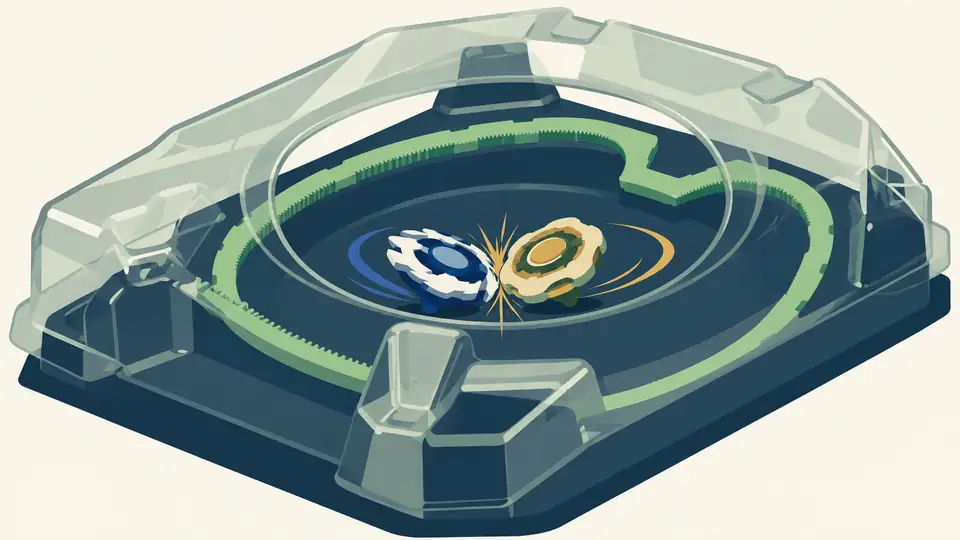
What I remembered
I grew up with the Metal series and loved those beys. My memory of the battles is considerably more dramatic than anything that actually happened in my stadium. With the Hasbro beys and stadium I had access to, matches often became long stamina battles. Two beys would circle each other, occasionally collide, and eventually one would stop spinning. The anime had set rather ambitious expectations for that arrangement.
I also loved the original Beyblade anime’s soundtrack and spectacular battles, though I never owned those beys. The Metal series was the one I actually played with, and that made it my deepest connection to the hobby. Even a fairly tame battle could keep me occupied because I cared about the beys involved.
I cared enough to start a YouTube channel and upload Beyblade videos back in 2011. When I got to high school, I took them all down because I was embarrassed. Apparently, I had become too mature to watch spinning tops. That seems to have worn off, especially once I discovered how many other adults were still enjoying them.
The community was still there
As I looked into Beyblade X, I found plenty of adult players who seemed like people I could get along with. Creators I remembered watching in 2011 and 2012, including BeybladeGeeks and Zankye, were still making content. Those familiar channels gave me a way back into the hobby, and the wider community made it easy to feel at home again.
There was something comforting about finding people who still enjoyed watching two beys battle. I had become embarrassed about it in high school, and now I was struggling to remember when it had actually stopped being interesting to me. The more I watched, the more I wanted to play again.
After a couple of days researching, I bought a Hasbro starter set with Dagger Dran. That gave me the chance to find out whether the excitement I had seen on YouTube would carry over to my own stadium. Dagger Dran answered that question fairly quickly.
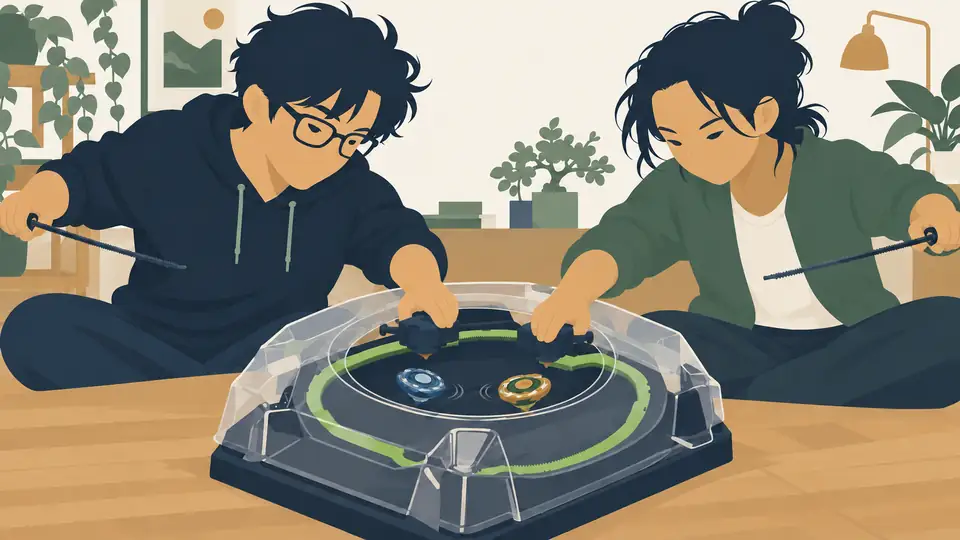
Dagger Dran gets my attention
Early on, my Dagger Dran ended up on the circular lip at the top of the stadium’s protective cover. It stayed spinning and raced around that upper rim at what I can only describe as the speed of light. I was sure that if it flew off and hit me, I would see stars. A few seconds earlier, I had been admiring the speed. Now I was mostly concerned about the direction.
During normal play, the geared bit engages the rail inside the stadium to accelerate the bey. 1 Dagger Dran’s trip around the protective cover was an unexpected moment that made the speed particularly memorable. I had wanted livelier battles, and there was certainly plenty happening in front of me.
I still love playing with Dagger Dran. Over the following months, I started trying different combinations and looking into competitive setups. That curiosity kept me involved long after the initial novelty, and it meant getting familiar with a new set of names and parts.

A short Beyblade X primer
Returning after years away, I had to learn what the labels actually meant before I could make much sense of the combinations people were discussing. There are two sets to understand: how a bey is designed to play, and which product line it belongs to.
The four play styles describe the intended approach. 1
| Play style | Intended aim |
|---|---|
| Attack | Deliver forceful hits |
| Defense | Resist attacks |
| Stamina | Keep spinning longer than the opponent |
| Balance | Combine attributes of the other styles |
Those labels are a useful starting point. The parts you combine and the way you launch also affect how the bey behaves, which is where experimenting becomes interesting. The product lines describe the design approach behind those parts. 2
| Product line | What it means |
|---|---|
| BX: Basic | The foundational line |
| UX: Unique | Emphasizes a particular performance characteristic |
| CX: Custom | Adds customization within the blade itself |
The usual three main components are the blade, which makes contact with the opponent; the ratchet, which sets the height; and the bit, the tip that influences movement. In its original structure, a CX blade divides into a lock chip, main blade, and assist blade, giving you more combinations to try. 2
Learning the terminology also cleared up an old habit of mine: the part I initially called Wizard Rod’s “fusion wheel” is the blade in Beyblade X. Unfortunately, I had a fairly disappointing reason to pay attention to that particular part.
More options, more frustrations
My Wizard Rod’s blade cracked. That was disappointing, particularly in a hobby where the whole point is to make the toys collide. It brought durability into the picture at a time when I was mostly enjoying the process of trying new combinations.
I’ve also had less success with the CX beys I own. The extra customization appealed to me, and I’ve spent time experimenting with it. With the combinations I’ve tried so far, I still prefer how my other beys play. More options have given me more to explore, without necessarily producing a setup I enjoy more.
These experiences made me think about what I expected from the hobby when I was younger. I used to buy a bey and play with it extensively. I remember quality complaints on the forums back then too, so I wouldn’t claim that everything used to be perfect. These days, those issues occupy more of my attention, especially after Wizard Rod cracked. I don’t have the data to say whether failures have become more common; I can say that durability matters to me when I’m deciding what to buy.
Availability became another frustration when I noticed the scalpers. Apparently, even spinning tops were worth buying up and reselling at a markup. I mostly kept playing with the beys I already had. Between a cracked blade and inflated resale prices, I had started thinking about how much it should cost to keep enjoying a childhood hobby.
Beyblade as a business
That question also made me curious about the companies behind it. My own return followed a fairly straightforward path: a video caught my attention, I bought a starter set, and playing with it got me interested in more beys and parts. It is easy to see how returning adults could become valuable customers, particularly when they already have a connection to the brand.
Hasbro listed Beyblade among its growing brands in its 2025 results. Across its wider Consumer Products business, revenue fell 4%, with growth in brands including Beyblade helping to offset declines elsewhere. 3 Takara Tomy’s report for the year ended March 31, 2025 also described Beyblade X’s appeal across children and adults, tournaments without age restrictions, and overseas momentum. 4 These disclosures suggest a broader audience for the hobby, although they do not isolate Beyblade’s profit contribution.
For me, the interesting part is what keeps someone buying after the first set. Enjoying the beys I own gives me a reason to look at new releases. Durability and reasonable prices give me confidence that I can keep participating. The resale markup goes to the scalper, so an expensive secondhand purchase does not necessarily mean more revenue for the manufacturer. From this small financial lens, attracting returning players is only the beginning; keeping the hobby enjoyable and accessible seems central to retaining them.
My younger self knew what he enjoyed
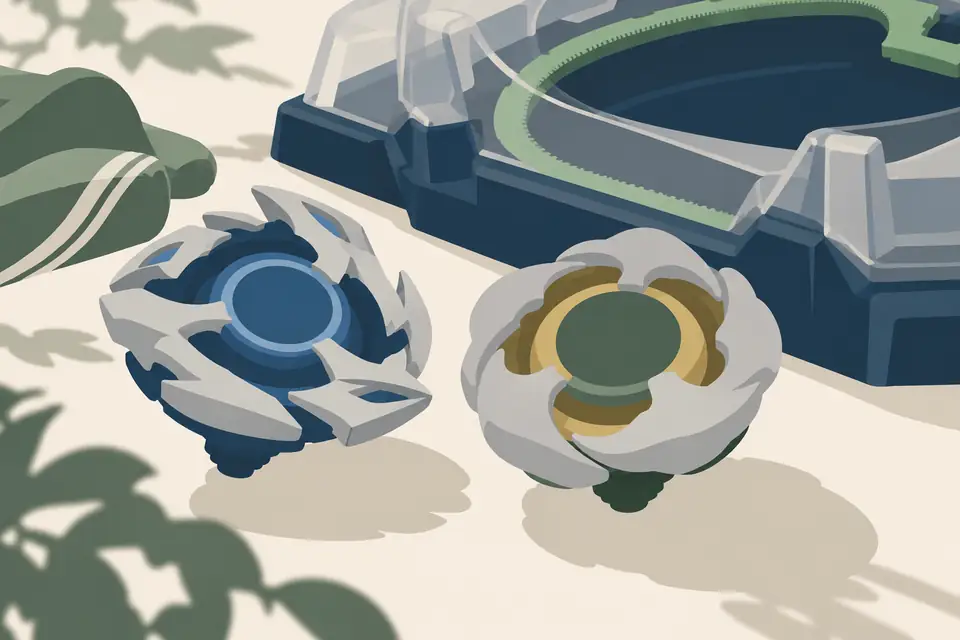
Thinking about why I would keep buying brings me back to why I returned in the first place. I wanted to play again. The videos, familiar creators, and faster battles gave me enough reason to pick up a launcher, and I’ve been surprised by how easily the interest came back.
As a child, I liked these beys enough to make videos, follow creators, and read the forums. Much of that still appeals to me. Thinking about that old YouTube channel now, the embarrassment seems harder to explain than the enjoyment. My younger self knew how to have a good time, and I’m glad I gave myself the chance to try it again.
I’d like to keep playing, with better quality and a hobby that stays accessible to the people who enjoy it. For now, I’m still having fun with Dagger Dran. That excitement is what brought me back this May, and it is what has kept me here over the past few months.
Sources & references
- Beyblade X parent guideBeyblade · Play styles, parts and the rail system↩
- Beyblade X gear structureTakara Tomy · BX, UX and CX terminology↩
- Fourth-quarter and full-year 2025 resultsHasbro · Brand performance and Consumer Products revenue↩
- Integrated Report 2025: fiscal-year reviewTakara Tomy · Year ended March 31, 2025 (PDF)↩